
BookTrib’s Bites: Jump-Start Summer with These Four Exciting Reads
(NewsUSA) -
- 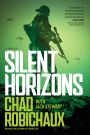 “Silent Horizons" by Chad Robichaux
In this new military thriller, Foster Quinn is more than a former Force Recon Marine: he’s a husband, father, and faithful brother to his teammates. When one of them is killed during a high-risk operation, Foster struggles to balance his roles as a dedicated family man and an elite warrior.
Then he gets the chance to step in where his best friend left off, assuming a cover identity that will pave the way for a critical mission. On his own in a new country, he must carefully choose who to trust. One wrong move could spell disaster.
From former Force Recon Marine Chad Robichaux and Navy TOPGUN fighter pilot Jack Stewart comes a thriller that gives readers a pulse-pounding glimpse into the clandestine side of special operations. It’s perfect for fans of Jason Bourne and James Reece and makes a great Father’s Day gift.
Purchase at https://amzn.to/43FrimM.
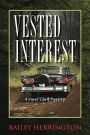 “Vested Interest” by Bailey Herrington
Vested interest: "a special concern or stake in maintaining or influencing a condition, arrangement or action especially for selfish ends." — Merriam Webster Dictionary.
In “Vested Interest: A David Elliott Mystery,” an attractive, intelligent young member of David Elliott’s congregation disappears; fear and ugly rumors spread throughout the community and the congregation. After her strangled body is found, the autopsy reveals startling details. The investigation, hampered by a lack of solid evidence, proceeds slowly. When another member of David Elliott’s congregation dies mysteriously, the increasing anxiety rips the church apart and intensifies David’s doubts about his ability and self-worth. David finds evidence that appears to incriminate members of his congregation as killers. His daring plan to confront the killers erupts in violence and death before the killers can be brought to justice.
Purchase at https://amzn.to/3S5X857.
 “Portrait of a Feminist” by Marianna Marlowe
Infused with a passion for justice, this expansive memoir by a biracial and multicultural feminist will appeal to fans of “Crying in H Mart” and “How to Raise a Feminist Son.”
With writing that is simultaneously wise and shimmering, nuanced and direct, Marlowe confronts her own experiences with the hallmarks of patriarchy. Interweaving stories of life as the child of a Catholic Peruvian mother and an atheist American father in a family that lived many years abroad, she examines realities familiar to so many of us — unequal marriages, class structures, misogynist literature, and patriarchal religion. Through braided memories that flash against the present day, “Portrait of a Feminist” explores the essential questions of feminism in our time: What does it look like to live in defense of feminism? How should feminism be evolving today?
Purchase at https://amzn.to/4iPNyhE.
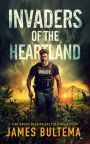 “Invaders of the Heartland” by James Bultema
After LAPD brass scrutinized his split-second decision in a deadly bank shootout, Detective Jake Dalton left the city behind for his hometown—Fairview, Oklahoma. But his return to small-town life is anything but quiet.
Taking over a struggling four-person police department, Jake believes he’s left big-city crime in the past—until the Chinese mafia moves in, turning Fairview into the hub of a ruthless billion-dollar marijuana empire.
When Jake sounds the alarm, federal agents dismiss him, and local officials look the other way. Outgunned and outnumbered, he stands alone as the last line of defense against a brutal syndicate determined to seize total control. One wrong move could cost him everything.
Written by a retired LAPD officer, Invaders of the Heartland is a gritty, high-stakes police procedural brimming with real-world authenticity, crime, and conspiracy. The story may be fiction, but the crisis is very real.
Purchase at https://amzn.to/4iV5GGU.
 -
- 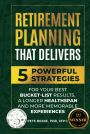 "Retirement Planning That Delivers" by Pete Bosse, PhD, CFP
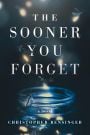 “The Sooner You Forget” by Christopher Bensinger
 BookTrib’s Lit Picks: First Chapters From the Hottest Books
 “Voices of the Civil War” by Barry Robbins
 - Summer is almost here, and the educators at
 - Demand for apartments is at a record high, with renters signing new leases and renewing their existing stays in droves. Residents’ expectations have also increased as they want their renting experience to be as seamless as the rest of their online life. That means integrated technology, financial wellness tools and rewards for their loyalty.
 - It's tax season and consulting firms are touting their quick and easy services to relieve the stress caused by filing complex returns.
 - U.S. energy demand is surging at an unprecedented rate. With economic growth, technological advances, and industrial expansion, our country’s energy demand is projected to grow by between 35% and 50% by 2040, potentially outpacing supply growth.
 - We are in an era of unprecedented energy demand growth, driven in large part by the rise of artificial intelligence, the rapid expansion of data centers and an unprecedented increase of American manufacturing. Clean energy is now the fastest-growing source of new power in the U.S., and meeting this rising demand will require a diverse, reliable mix of energy resources.
 -
- 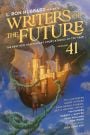 “Writers of the Future Vol 41” by L. Ron Hubbard
 “She Who Rides Horses: A Saga of the Ancient Steppe, Book One” by Sarah V. Barnes
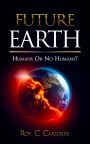 “Future Earth” by Roy C. Carriker
 “Change of Heart” by Cristina LePort, M.D.
 - Backyards are getting a serious glow-up—and pools are leading the charge. From modern designs with resort-worthy features to automation that practically runs the show, today’s pools are all about style and simplicity. The best part? They're easier than ever to own with less upkeep and more “ahhh.”





 - More than 100,000 Americans have said goodbye to their common skin cancer without requiring surgery, owing to a relatively new noninvasive treatment available at many dermatology practices around the nation.


